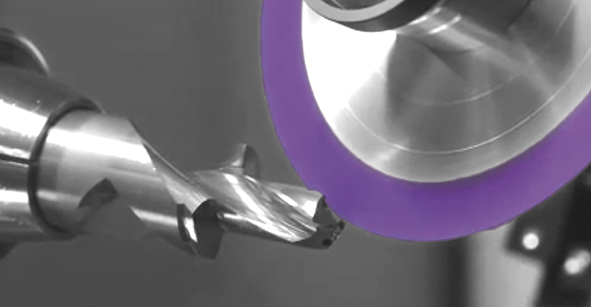


Frankfurt am Main, 12. December 2025 – When the hardest material in the world and soft plastic come together, the result is tools with very special grinding properties. We are talking about elastic bonded diamond grinding wheels. These show their strengths during finishing and ensure the perfect finish. Innovative processes such as these are necessary because the manufacturing industry faces the challenge of producing increasingly complex and precise components from resistant materials. Conventional production methods often reach their limits here, especially when the surfaces are so fine that they require particularly sensitive processing. At the GrindingHub trade fair, organized by the VDW (German Machine Tool Builders’ Association) in Stuttgart from May 5 to 8, 2026, visitors will learn more about innovative grinding techniques for achieving the highest surface qualities.
For demanding finishing and polishing processes
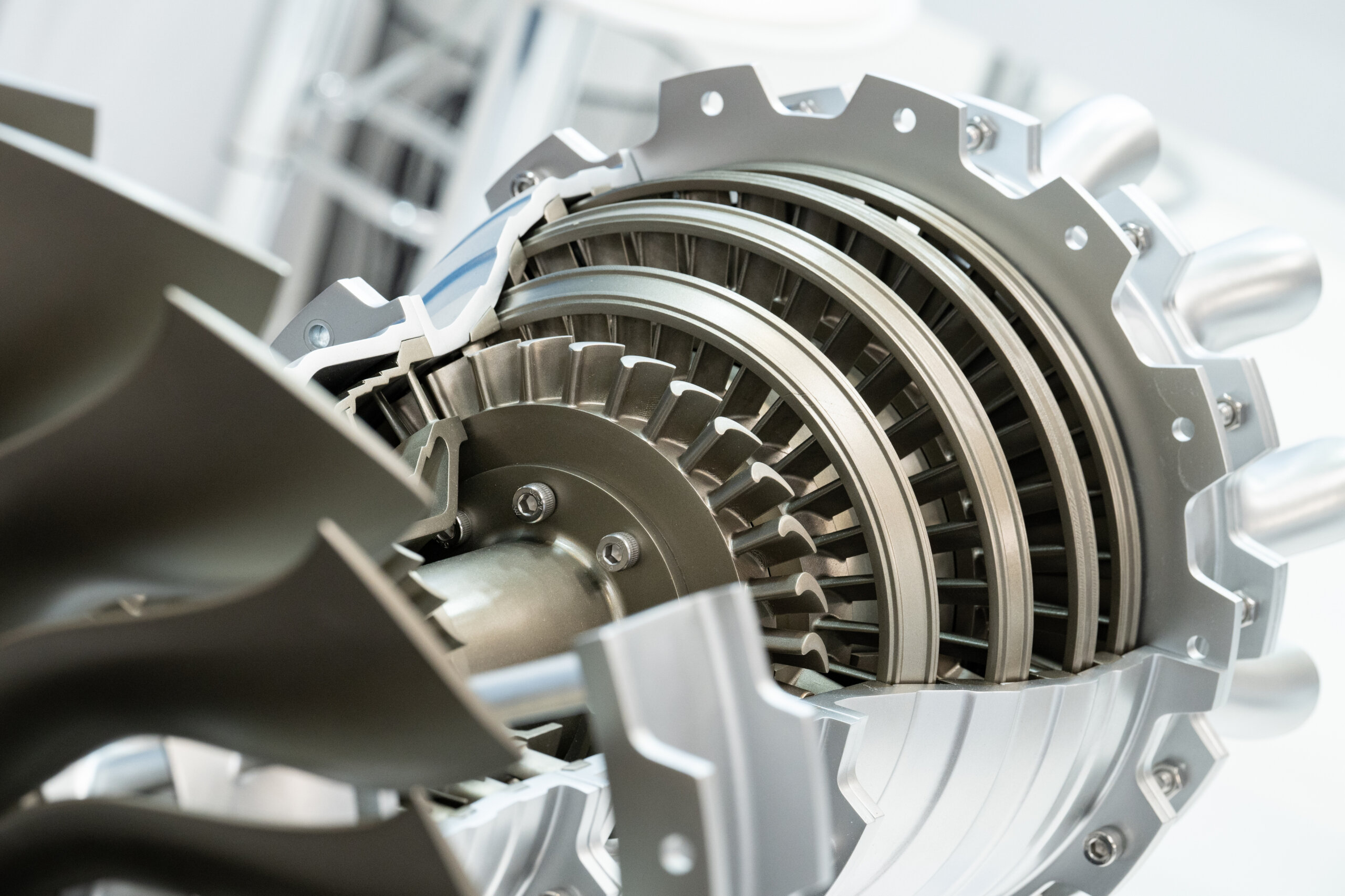
Elastic grinding and polishing tools are used in a wide variety of industries. In metalworking, they refine surfaces ranging from the finest surgical instruments to heavy-duty turbine blades. These tools can be used to accelerate manufacturing processes and increase cost-effectiveness and sustainability in production. “Our elastic bonded diamond tools demonstrate their strengths wherever extremely hard materials such as carbide need to be machined with precision,” says Jens Meiberg, Head of Technology Development at GrindingHub exhibitor Artifex Dr. Lohmann GmbH & Co. KG, a specialist in elastic grinding and polishing tools based in Kaltenkirchen near Hamburg. “They achieve their maximum effect particularly in applications where extremely fine surfaces, even mirror finishes, are required,” says Meiberg. This makes them ideal for demanding finishing and polishing processes. According to Meiberg, Artifex is currently focusing on the machining of carbide drilling and milling tools to improve cutting edges and achieve more efficient chip removal from cutting tools.
Greater efficiency and reduced overall costs
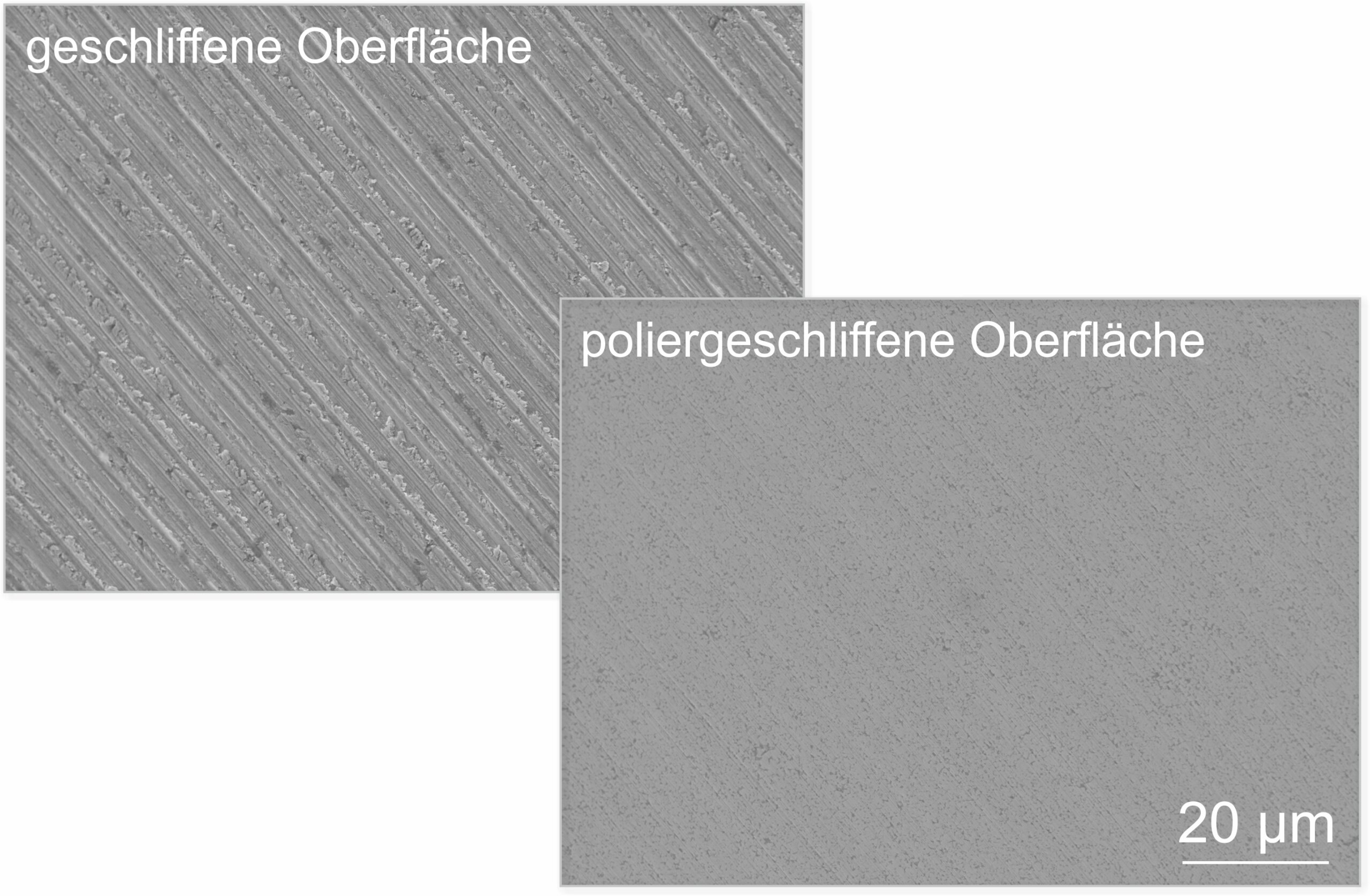
Technically optimal surfaces are one thing, cost-effectiveness is another. In industrial practice, it ultimately comes down to the cost-benefit analysis for the user. In other words: When does the improved surface quality justify the higher cost? “Studies show service life improvements of more than 50 per cent compared to unprepared tools,” says Artifex manager Meiberg. Combined with faster chip flow and greater chip volume, users achieve significant cost and service life advantages. Machining with elastic bonded diamond tools significantly improves the surface quality of the machined workpieces. In practice, this optimization leads to noticeably longer service life for subsequent tools and more stable and reliable process behavior. Users benefit from greater efficiency and reduced overall costs,” says Meiberg.
Delicate machining for delicate surfaces
Some surfaces are so delicate that they must be machined with extreme care. As the Head of Technology Development at Artifex explains, flexibly mounted diamond particles achieve “non-contour-changing glossy surfaces” by cutting topological material peaks. The homogeneously distributed abrasive medium bounces back and forth in the bonding matrix. Put simply and in layman’s terms: the soft mass gives way slightly, so that the grains wobble slightly when rubbed instead of scratching firmly. Therefore, the surface is only gently smoothed and polished, rather than aggressively removing material or changing the shape. In other words: the smarter grinding wheel gives way. “The pressure and speed parameters of the process pose the greatest challenge in preventing grain break-outs from this newly developed soft bond,” says Meiberg. The surface quality can be achieved reproducibly throughout the entire life cycle of the disks. Thanks to the tool change options in the machine, machining is carried out in a single clamping and not through downstream processes. According to Meiberg, Artifex’s in-house Research and Development Department ensures the continuous advancement of diamond tools – particularly with regard to new carbide alloys and modern carbide tools.
Scope for basic research down to the nanometer range
There is still plenty of scope for basic research at universities in the micro- and nanometer range. This also applies when using flexible precision machining tools in the finishing of structured surfaces. Dr. Monika Kipp, who heads the Grinding Technology Department at the Institute of Machining Technology at the Technical University Dortmund, is intensively involved in this topic. “One example of the use of flexible precision machining tools is the finishing of structured surfaces,” says Kipp. If these are produced by milling, for example, micro-burrs may occur. In order to remove these without significantly altering the structure and at the same time improving the surface finish, the tools must be highly adaptable and only a very small amount of material should be removed. “To achieve this goal, our research focuses on the fundamental process behavior of flexible diamond tools,” says the scientist, who was recently awarded the Otto Kienzle Commemorative Medal by the WGP (Scientific Society for Production Engineering).
Perfect choreography
When machining highly sensitive surfaces with flexible tools, it is essential to know exactly how the tools and material interact. “In order to avoid unwanted contour changes in precision machining with elastic bonded diamond grinding wheels or other flexible grinding tools, it is essential to understand the basic process interactions,” says Kipp, summarizing the key challenge. This includes, for example, coordinating the process parameters and the bonding strength or flexibility of the tools and thus the local contact situation. In addition, according to the scientist, targeted adjustments to the process control with regard to the kinematics of the procedure could also be effective. In layman’s terms, you can imagine it as choreography. How fast does the grinding tool move? How fast is the workpiece moving? At what angle or pattern do the grains strike the surface? How often does a single grain engage with the material? For optimal results, perfect coordination is essential.
Three factors: contact pressure, contact time, grain size
The surface quality in precision machining depends, among other things, on the local contact situation, says Kipp. “When it comes to process design, a distinction must be made in terms of the objective: whether the aim is to achieve the lowest possible roughness or whether functional surfaces with structural or contour elements need to be reworked,” explains the researcher. Flexible abrasive tools can be used for corresponding applications. Material removal and thus the surface finish can be controlled by adjusting the contact pressure, contact time, and grain size, among other factors.
The grinding gap is a mystery
Applications at the limits of what is technically possible and economically viable therefore open up a wide field for industrial and academic research. Because the saying among experts still holds true: “The grinding gap is a mystery.” This phrase suggests that practitioners and researchers still need to shed light on the deepest physical and process engineering secrets of grinding in order to technically optimize industrial production processes and make them more efficient and sustainable.
(Length: 8,233 characters, including spaces)
Author: Daniel Schauber, specialized journalist, Mannheim
Contacts
VDW
Gerda Kneifel
Communication
Lyoner Str. 18
60528 Frankfurt am Main
Germany
g.kneifel@vdw.de
Tel. +49 69 756081-32
www.vdw.de
Artifex Dr. Lohmann GmbH & Co. KG
Jens Meiberg
Head of Technology Development
Feldstrasse 8
24568 Kaltenkirchen
Germany
meiberg@artifex-abrasives.de
Tel. +49 4191 935-0
www.artifex-abrasives.de
Institute of Machining Technology
Technical University Dortmund
Dr.-Ing. Monika Kipp
Head of Grinding Technology
Baroper Str. 303
44227 Dortmund
Germany
monika.kipp@tu-dortmund.de
Tel. +49 231 755-90164
www.isf.de
Daniel Schauber
Specialized Journalist
Meerfeldstr. 14
68163 Mannheim
Germany
daniel@schauber.com
Tel. +49 1702031976
Downloads
Images:
Image 1: 1_Grinding_wheel_on_drill.jpg
Image 2: 2_Jens_Meiberg.jpeg
Image 3: 3_Monika_Kipp.jpg
Image 4: 4_Comparison_of_ground_and_polished_surfaces.jpg
Image 5: 5_turbine_blade.jpg