

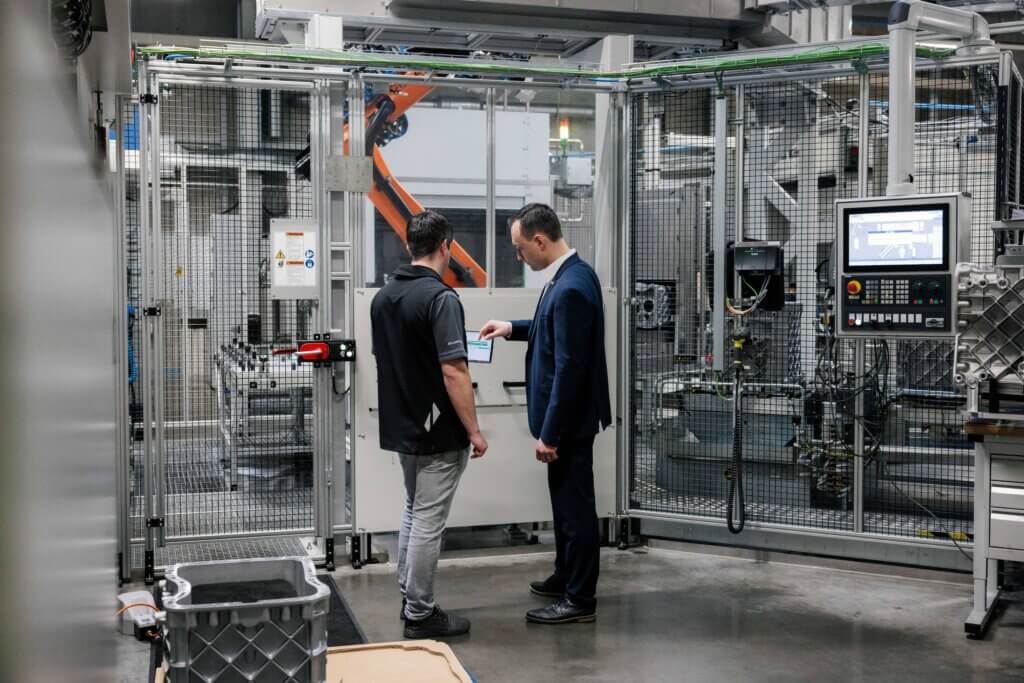
Machining precision alone is a thing of the past. Today, intelligent algorithms and interconnected data streams determine global competitiveness on the factory floor. Anyone who wants to stay competitive in an era of labor shortages and volatile supply chains must radically transform the traditional, analog shop floor into a closed and secure digital data room.
How can the transition to fully digitized manufacturing be successful when small and medium-sized enterprises, in particular, still lack standards, resources, and expertise? Answers to this question will be provided by the new trade show NexGeM (Next Generation Metalworking), which, as a co-located event with Hannover Messe, will offer insights into digital metalworking from April 5 to 8, 2027. Under the theme Metal Works Digital, NexGeM brings together exhibitors and visitors with experts in IT, digitalization, and automation.
Companies that want to transform their production and build a smart factory run the risk of getting stuck in the notorious pilot project trap. That is why best-practice approaches are needed. “Digitalization is not an isolated project, but a long journey with many milestones,” says Prof. Jürgen Fleischer, Director of the wbk Institute of Production Science at the Karlsruhe Institute of Technology (KIT). “It starts with management realizing that there’s no way around this journey. Because customers are already moving in this direction and won’t wait for the slowest ones,” said Fleischer, who has also been serving as President of the WGP (German Academic Association for Production Technology) since early 2026.
Fleischer recommends that companies define specific steps in their digital transformation efforts and implement them consistently. “Simply launching a pilot project and seeing if it works isn’t enough,” said the academic. Management must analyze the entire work process, identify the bottlenecks, and systematically address them. “And management needs to be aware that digital transformation involves a lot of effort that doesn’t pay off immediately,” he warns.
The entire process chain needs to be faster
“A very mixed picture” emerges when it comes to the progress of digitization in factories, says the production engineer from Karlsruhe. “Some companies are actually still quite behind, and it’s striking that the level of digitization doesn’t correlate with company size,” he explains. Companies that supply the automotive industry are generally already quite well positioned when it comes to digitalization. In this sector, industry pressures have triggered and accelerated the digital transformation process. “Companies that are fully exposed to global competition must be able to prepare a quote and deliver it in the shortest possible time. If a business isn’t fully automated, it’s too slow, and someone else will take its place,” says Fleischer. In addition, the platform business is expected to grow. “This makes everything simple and fast,” the academic sums it up. “The baby boomers are retiring, and their successors must navigate the transition to digitalization. If a business has been organized primarily using analog methods up to this point, it could very well take up to five years to achieve full digitization.”
External specialists provide a helping hand
To achieve this, companies need, not least, qualified staff with strong digital skills, and they must provide training for their employees. “If management thinks it’s possible to simply let digital transformation run alongside day-to-day business, it certainly won’t work, and digital transformation projects will quickly fizzle out. This can be frustrating and lead to the wrong conclusion that digitization is inefficient and doesn’t pay off. But it doesn’t have to be that way: Experts can take an “outside” look at the project, sometimes at very little cost. “The WGP institutes, for example, are located throughout Germany and have experienced digitalization specialists who can provide on-site support to companies,” said Fleischer.
It’s faster with AI
However, there are still too many gaps in digital processes. According to Fleischer, in everyday factory operations, data is often still collected at one station, exported to Excel, copied to a USB drive, and then imported at the next station. That is very inefficient. To remain competitive in three years, traditional metalworkers must develop a range of core digital skills today. “Work preparation, NC programming, and resource planning must run absolutely seamlessly in the digital realm, and in production, setup times and the use of robots must be optimized so that the entire process chain becomes faster.”
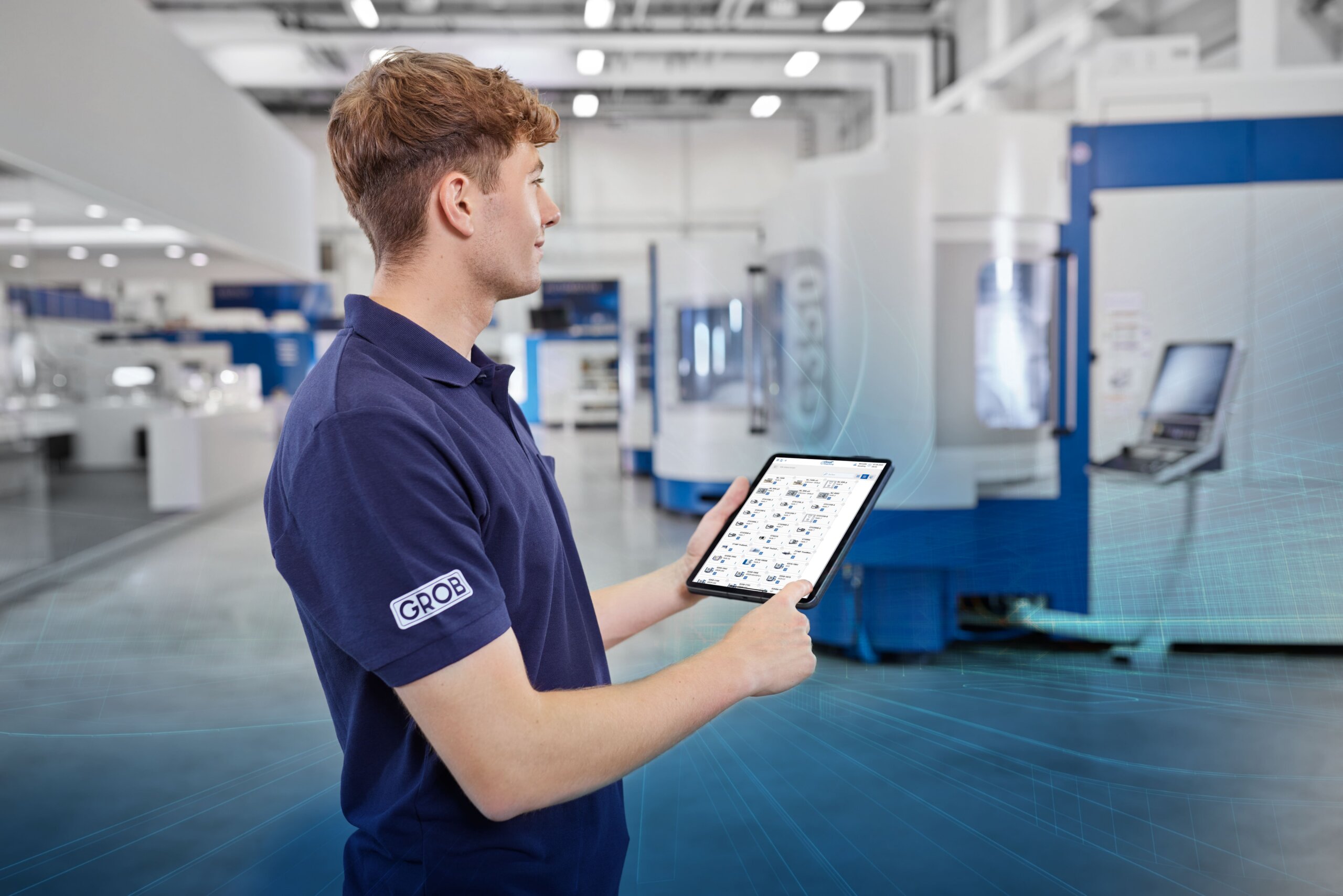
However, AI helps to significantly accelerate the digital transformation process. The Federal Ministry for Economic Affairs also has major programs in place to prepare the digital infrastructure – for example, through data rooms where suppliers and customers can securely exchange their data. A medium-sized company from the Allgäu region has shown how digital transformation can succeed in practice: Grob-Werke, based in Mindelheim, took the leap from a traditional machine manufacturer to a pioneer of the data-driven smart factory as early as 2013.
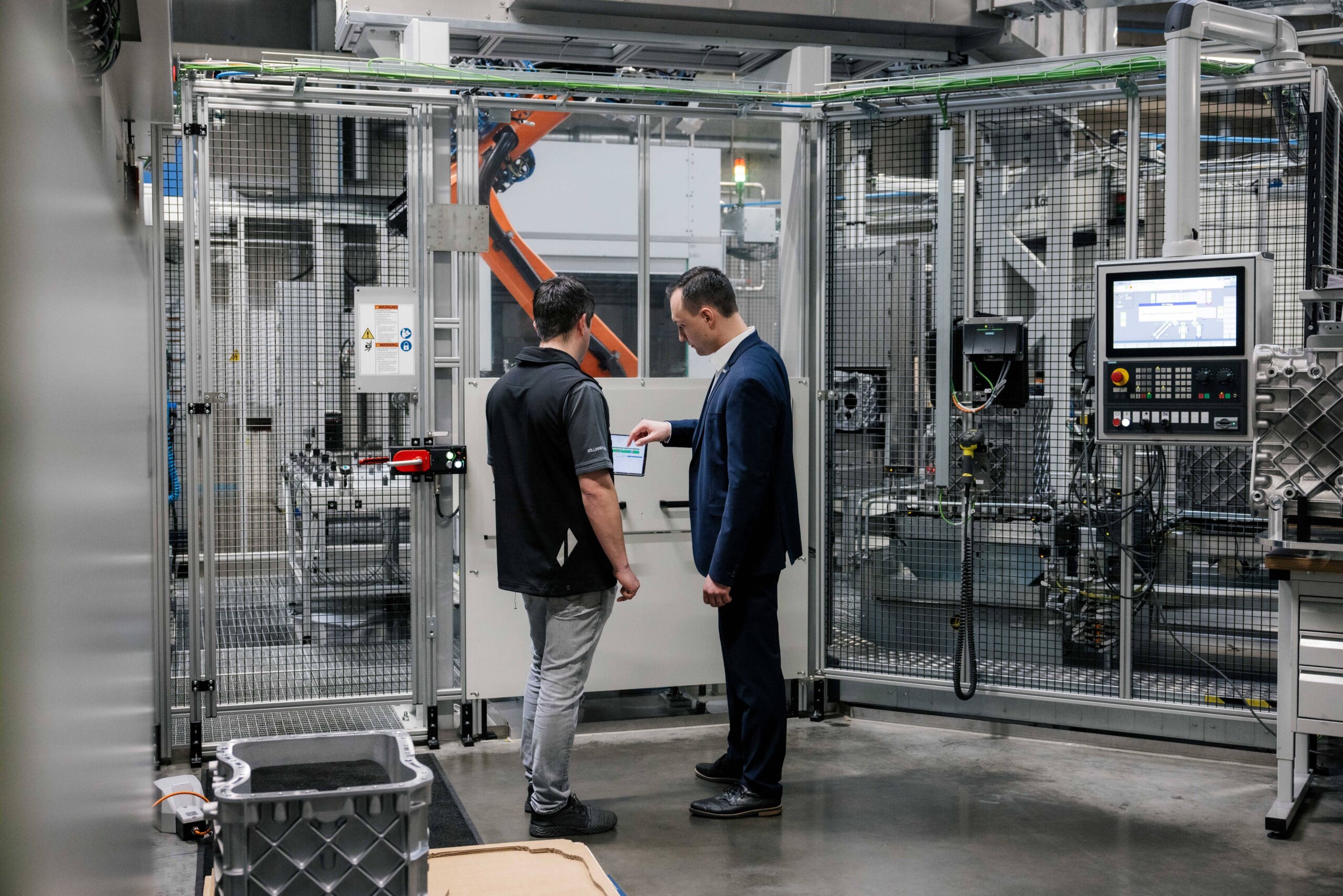
It all began with the establishment of the company’s in-house Industry 4.0 development department, Grob-Net4Industry. “The first task for the newly formed team was to develop a connector that would interface directly with the control systems of the various machines in our production facilities. Regardless of the manufacturer or age,” says Benedikt Gundling, Product Manager for Digital Products at Grob-Werke. After all, connectivity is always the starting point for digital transformation on the factory floor: older and newer systems must speak the same language.
Standardization initiatives are important
In this way, Grob-Werke was able to digitize its entire shop floor down to the level of PLC/NC variables, even without OPC UA interfaces on the controllers. In other words: The company had developed a way to retrieve machine data directly from the lowest control levels – PLC (Programmable Logic Controller) and NC (Numerical Control) – without relying on the modern OPC UA (Open Platform Communications Unified Architecture) communication protocol, which is today’s standard for data exchange in industrial automation. “Standardization communities like umati are important for the industry, but they require a modern management system,” says Gundling, adding: “For the inventory in our warehouses – which has grown over decades – we also needed to find our own approach.”
Grob-Werke plans to showcase the insights and products resulting from this initiative at NexGeM in Hanover: “NexGeM 2027 offers us an excellent opportunity to present our digital solutions from Grob-Net4Industry, as well as our MES system Cosera, to a relevant professional audience and to demonstrate the added value they offer for modern metalworking,” according to Grob-Werke. “Since this is the first time the trade show is being held, we are looking forward to showcasing our products in a new setting, making new contacts, and gaining further insights from the industry.”
Efficiency gains of 8 to 15 per cent within a year
However, simply collecting machine data does not, in and of itself, increase plant effectiveness. It provides the tool that makes it possible to identify which processes create bottlenecks, which sources of error most frequently reduce machine availability, and what impact specific measures have. “Based on our experience, efficiency gains of 8 to 15 per cent within a year are realistic when a continuous improvement process is actively implemented in manufacturing,” said Gundling.
Grob’s connector also digitizes machines with older control systems, such as the 840D powerline. It makes the collected data available via a gateway using MQTT (Message Queuing Telemetry Transport) or OPC UA for further processing. MQTT is a lightweight network protocol for the Internet of Things (IoT) and Industry 4.0, whereas OPC UA is highly complex. In some cases – for example, when the control systems are not network-compatible – Grob-Werke uses low-cost IPCs from established manufacturers to digitize them. The retrofit is performed during normal operation, without any intervention in the system or the hall structure. “We first implemented this approach in our own production facility in Mindelheim before offering it to our customers,” says the digitalization expert.
Focus on cybersecurity
Production managers quickly realized the benefits of machine data collection. “Cybersecurity, however, is an important topic of discussion that we address with companies’ IT managers,” says Gundling. In most cases, this is less about espionage and more about data sovereignty. “We secure our systems through ‘security by design,’ consistently align them with EU regulations such as NIS-2 and the Cyber Resilience Act, and regularly subject them to penetration tests conducted by external specialists. Depending on the products’ value proposition, we work with either fully on-premises or cloud-based applications.” In the latter case, the data is already processed by the connector on the machine, so that only defined machine data leaves the factory. “The manufacturing expertise stays in-house,” emphasizes the digitalization expert.
NexGeM will serve as a melting pot for the most pressing aspects of digital transformation. For Grob-Werke, one thing is certain: “We want to seize this opportunity and be part of this new trade show from the very beginning – a show whose focus is more current and relevant than ever.”
(Length: 9,734 characters, including spaces)
Author: Daniel Schauber, trade journalist, Mannheim
More information and registration for NexGeM: www.nexgem.de
Background on NexGeM
The German machine tool industry is one of the five largest fields of mechanical engineering. It supplies production technology for metalworking in all branches of industry and makes an important contribution towards its innovation and increased productivity. Due to its absolute key role in industrial production, its development is an important indicator of the economic dynamism of the entire industry. In 2025, the approximately 64,500 employees in the industry (companies with more than 50 employees) produced machines and services to the value of around 13.8 billion euros.
Downloads