

Frankfurt am Main, 23. April 2026 – Electric cars place special demands on manufacturing technology. To ensure that they are quiet, efficient, and durable, their mechanical components must be manufactured with the highest precision. When grinding components, differences of just a few hundredths of a micrometer can often make all the difference in terms of efficiency and noise levels. The foundation of quality assurance is comprehensive, data-driven monitoring of the grinding processes. The use of digital twins also makes the production of high-precision electronic components more robust and scalable. At the GrindingHub trade fair, organized by the VDW (German Machine Tool Builders’ Association) in Stuttgart from May 5 to 8, 2026, visitors will learn more about how state-of-the-art grinding technology is paving the way for the next generation of electric mobility.
Noise, vibration, roughness
“With electric vehicles, there are no engine noises to mask the sound. This makes vibrations from other components – such as those from the transmission – much more noticeable,” explains Prof. Thomas Bergs, who heads the Manufacturing Technology Institute (MTI) at RWTH Aachen University and serves as Director at Fraunhofer IPT. “What is crucial, therefore, is not only the precision of the tooth flanks, but also the control of system tolerances,” the Aachen-based scientist goes on to explain. Especially at the high speeds of electric drives, the entire tolerance chain is critical. “For example, the microstructures of conventionally ground shaft seal surfaces can cause unwanted leaks,” says Bergs. The focus is on the audible or perceptible vibrations of the vehicle, which are collectively referred to in the industry by the acronym NVH (Noise, Vibration, Harshness). “In the case of tooth flanks, geometric deviations are immediately transmitted to the drivetrain as rotational vibrations. A high-precision grinding process with minimal deviations is therefore crucial for precisely tuning the desired NVH behavior and effectively reducing unwanted noise,” explains Bergs.
When grinding components for electric mobility, it is also important to prevent defects in series production. For components under heavy load, such as the gears in e-mobility transmissions, surface integrity is particularly crucial because it has a significant impact on service life,” says Bergs. “We are therefore developing new methods to predict surface roughness and residual stresses using data-driven approaches and a digital twin. This allows critical issues to be identified early on and enables targeted process optimizations to be implemented for series production.” By linking real-time sensor data from the machine with physical models in the digital twin, the quality of components can be assessed during production and optimized immediately if necessary. “Model-based digital methods make it possible to incorporate the highest quality requirements as early as the process design phase,” explains Bergs. “This creates the conditions for implementing precision in a cost-effective and reliable manner.”
A hair’s breadth: Precision as a key to success
When considering future investments in production machinery, a key question is which innovations in grinding technology will be particularly effective in driving the advancement of e-mobility in the future. The scientific community is also conducting extensive research on this topic. Ultra-smooth surfaces are a key factor in further improving the efficiency of components in e-mobility. “In the manufacture of gears for electric gearboxes, optimized process chains combined with polishing and generative grinding appear to hold great promise,” says Bergs. Manufacturers of grinding machines are therefore required to ensure precision in the micrometer and even nanometer range. For comparison: Human hair has a diameter of about 50 to 100 micrometers. Ultrafine dust, such as that found in exhaust fumes, is about 100 nanometers in size – up to a thousand times smaller.
The machine tool manufacturer and GrindingHub exhibitor United Machining Solutions (Hall 9, Booth 9B50) is rising to this challenge. “As a provider of high-precision grinding technologies, we play a crucial role in meeting the growing quality requirements in the field of e-mobility,” says Christoph Plüss, Chief Technology Officer (CTO) of United Machining Solutions, based in Bern, Switzerland. “Our solutions enable surfaces in the micro- and submicrometer range, ensuring minimal noise, reduced friction, and maximum efficiency. At the same time, stable and reproducible processes ensure consistently high component quality in series production,” Plüss emphasizes.
Less friction, greater range, longer service life
“In addition to acoustics, efficiency and service life are particularly important,” adds the CTO at United Machining Solutions. “High-precision ground components reduce friction losses and thus directly contribute to optimizing the range,” said Plüss. In addition, they improved the reliability and durability of key components in the electric powertrain. Modern drive technologies, such as hybrid and electric drives, which recover electrical energy through regenerative braking, pose additional challenges for machining. “The increasing complexity of modern drive systems significantly raises the bar for precision, process reliability, and flexibility in machining,” explains Plüss. After all, different materials, new geometries, and combined functions must be machined to a consistently high standard of quality.
With the shift toward e-mobility, the range of components will change slowly and steadily over several years or even decades. The key business challenge for component manufacturers is therefore to adapt optimally to this situation through targeted investments. According to Plüss, United Machining Solutions relies on flexible machine concepts and modular production solutions that can be quickly adapted to new requirements. This is complemented by digital technologies designed to enable data-driven process optimization. “This is how we lay the groundwork for economically viable and future-proof manufacturing throughout the entire transformation period,” says Plüss.
Diversity in the powertrain meets demand
It is expected that various types of drives systems will coexist in the coming decades. In addition to battery-electric systems, optimized diesel engines, hydrogen-powered internal combustion engines, hybrid drives, and fuel cell technologies will continue to be used. “The technological diversity in powertrains will ensure a long-term demand for high-precision components, as each type of drive has specific requirements in terms of manufacturing and quality,” explains Plüss. At the same time, the manager expects the rise of autonomous vehicles to provide additional momentum, for example through increasing demands for precision, safety, and system integration. “Overall, this development opens up opportunities for sustainable growth in manufacturing technology,” says Plüss.
(Length: 7,428 characters, including spaces)
Author: Daniel Schauber, trade journalist, Mannheim
Machines and ideas for practical solutions
At GrindingHub, visitors will find production technology solutions for manufacturing electric vehicle components, particularly in Halls 7 and 9. These include generative grinding machines that guarantee extremely smooth operation in electric drives, as well as high-precision grinding systems that ensure perfect concentricity at high speeds, thereby minimizing vibrations in the powertrain. At the GrindingHub Forum in Hall 10, leading experts from industry and research will come together to discuss the latest ideas for practical solutions to current manufacturing challenges (www.grindinghub.de/forum).
Downloads
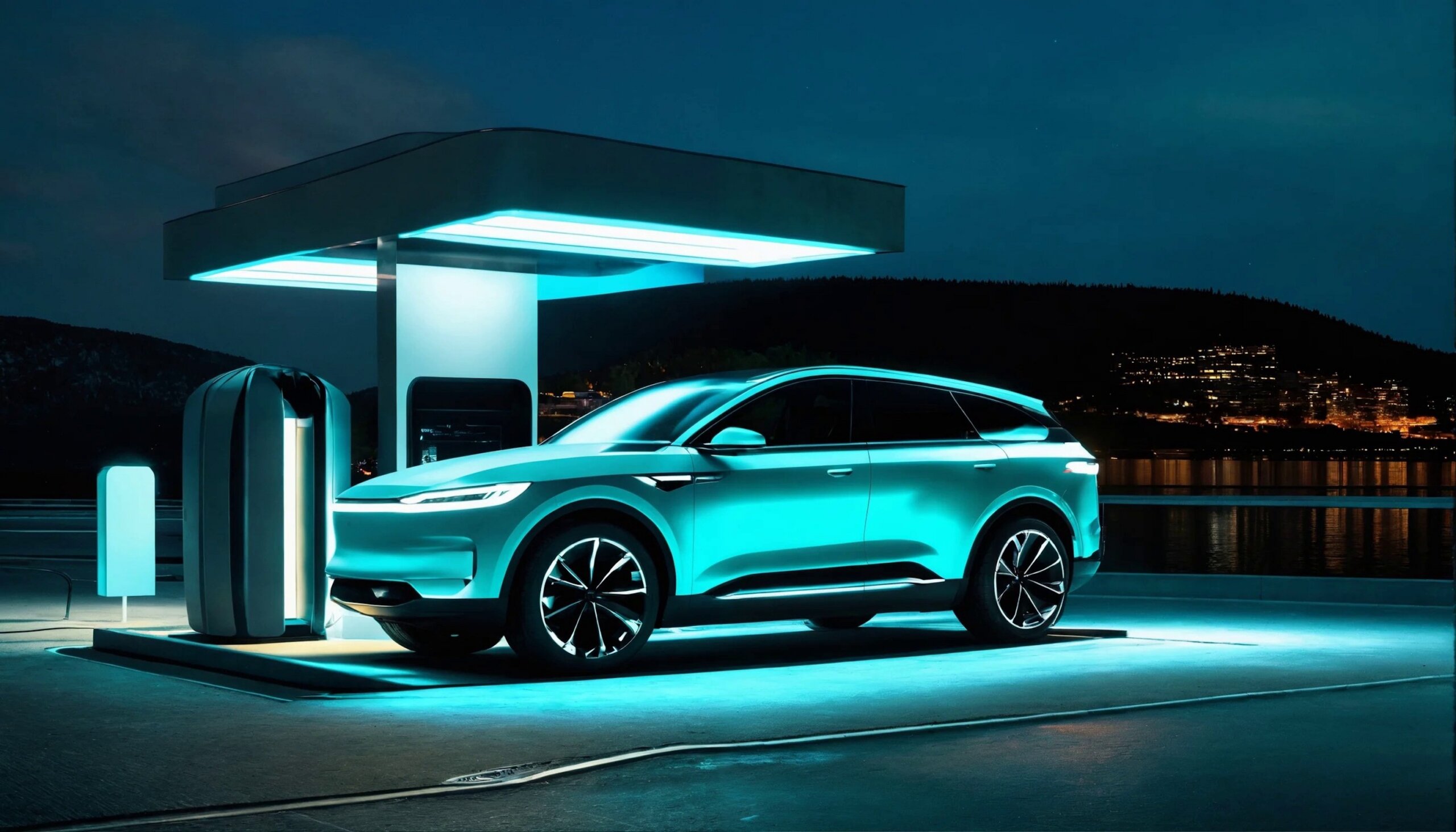
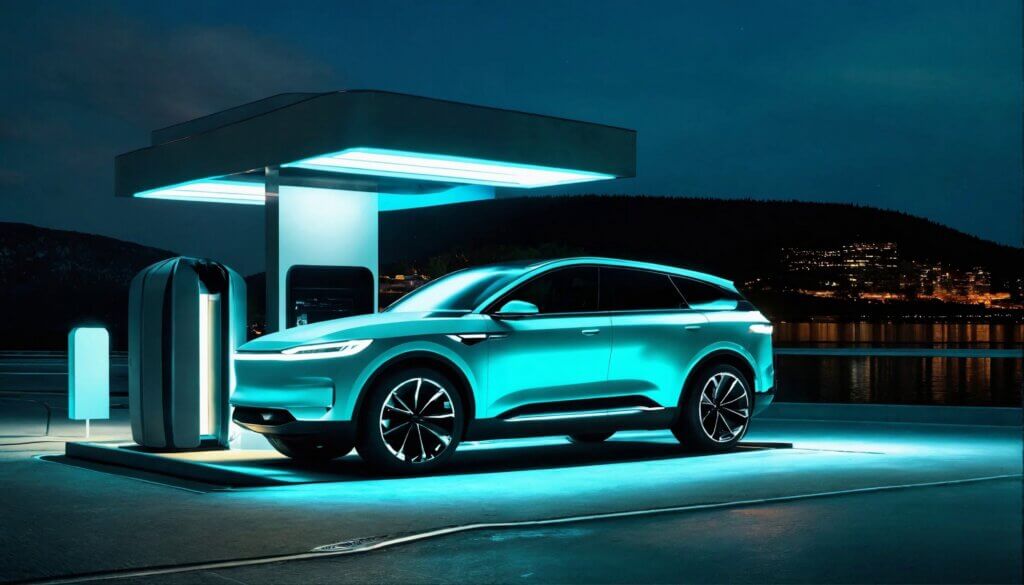
Pic 1: A polished appearance with an electric car: When there’s no internal combustion engine to mask the sounds, the surface of the components must be absolutely flawless. This is especially true of the mechanical components inside.
Image: Pixabay
Pic 2:”With electric vehicles, there are no engine noises to mask the sound. This makes vibrations from other components – such as those from the transmission – much more noticeable,” explains Prof. Thomas Bergs, who heads the Manufacturing Technology Institute (MTI) at RWTH Aachen University and serves as Director at Fraunhofer IPT.
Photo: MTI, RWTH Aachen University
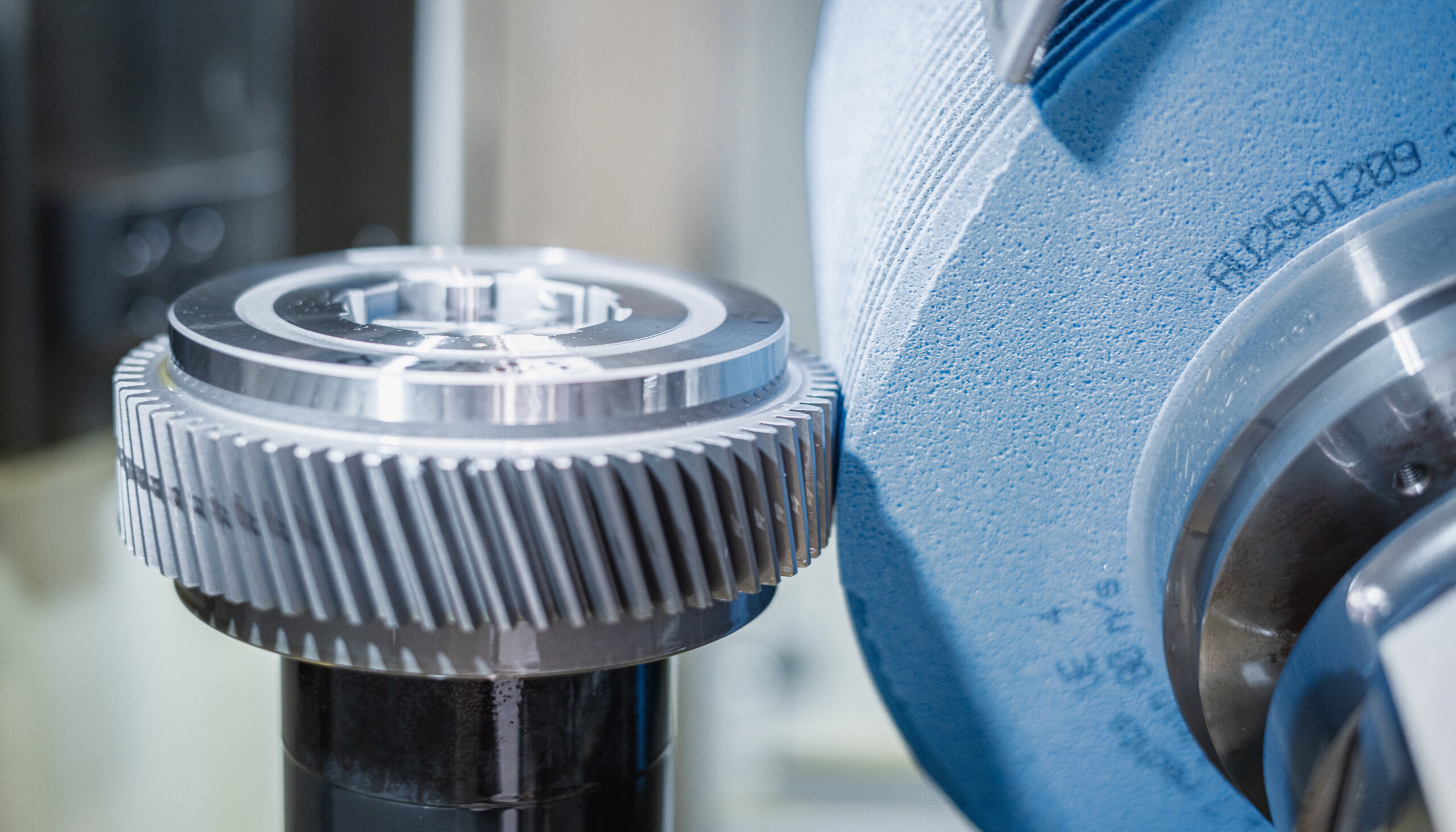
Pic 3: Generative grinding enables the cost-effective production of quiet and efficient gears for electric drive systems.
Photo: Hannes Schmidt
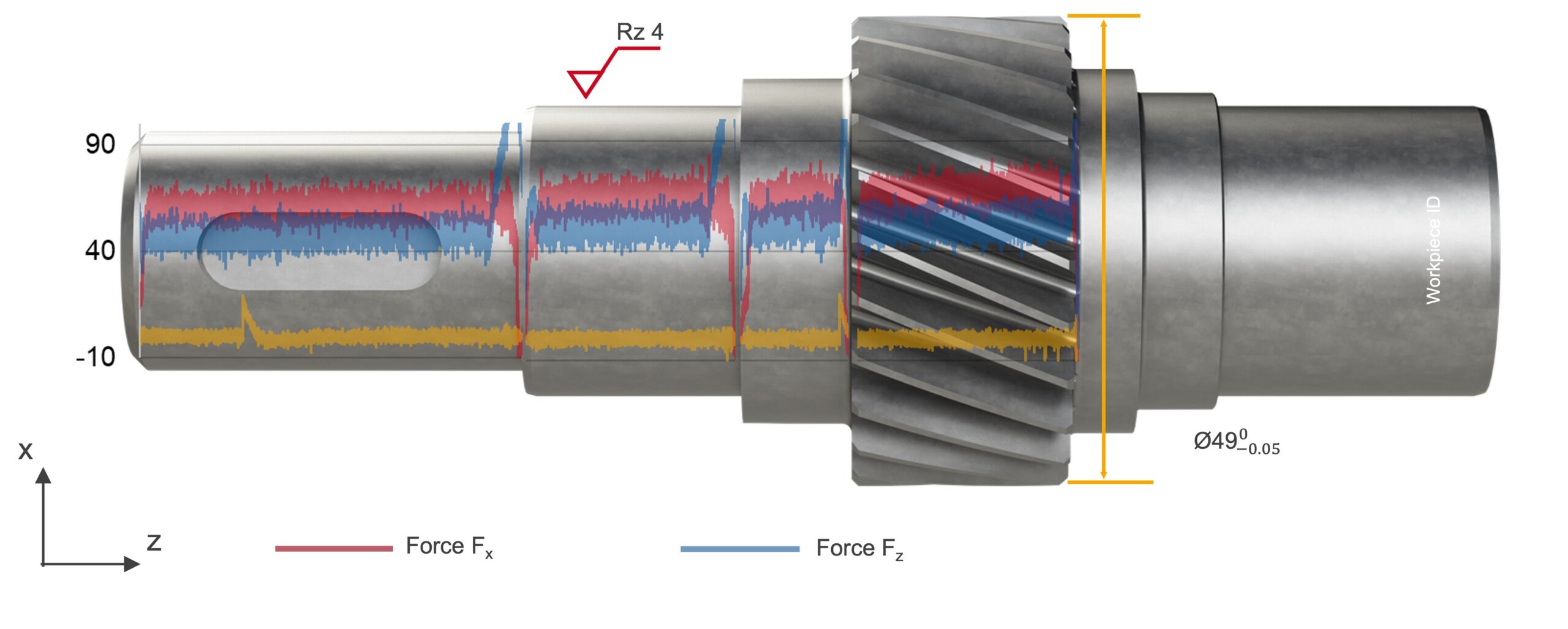
Pic 4: High-precision manufacturing is essential for modern electric drives. Surface finish is critical for optimal operation at high speeds. The photo shows a blank from the cylindrical grinding process, which forms the basis for the complex process design and control of a pinion shaft in the powertrain.
Photo: MTI, RWTH Aachen University
Pic 5: Perfection is key when manufacturing pinion shafts for electric powertrains. The highest standards for surface quality minimize friction and noise, while comprehensive quality control during manufacturing and precise fit ensure maximum efficiency.
Photo: MTI, RWTH Aachen University
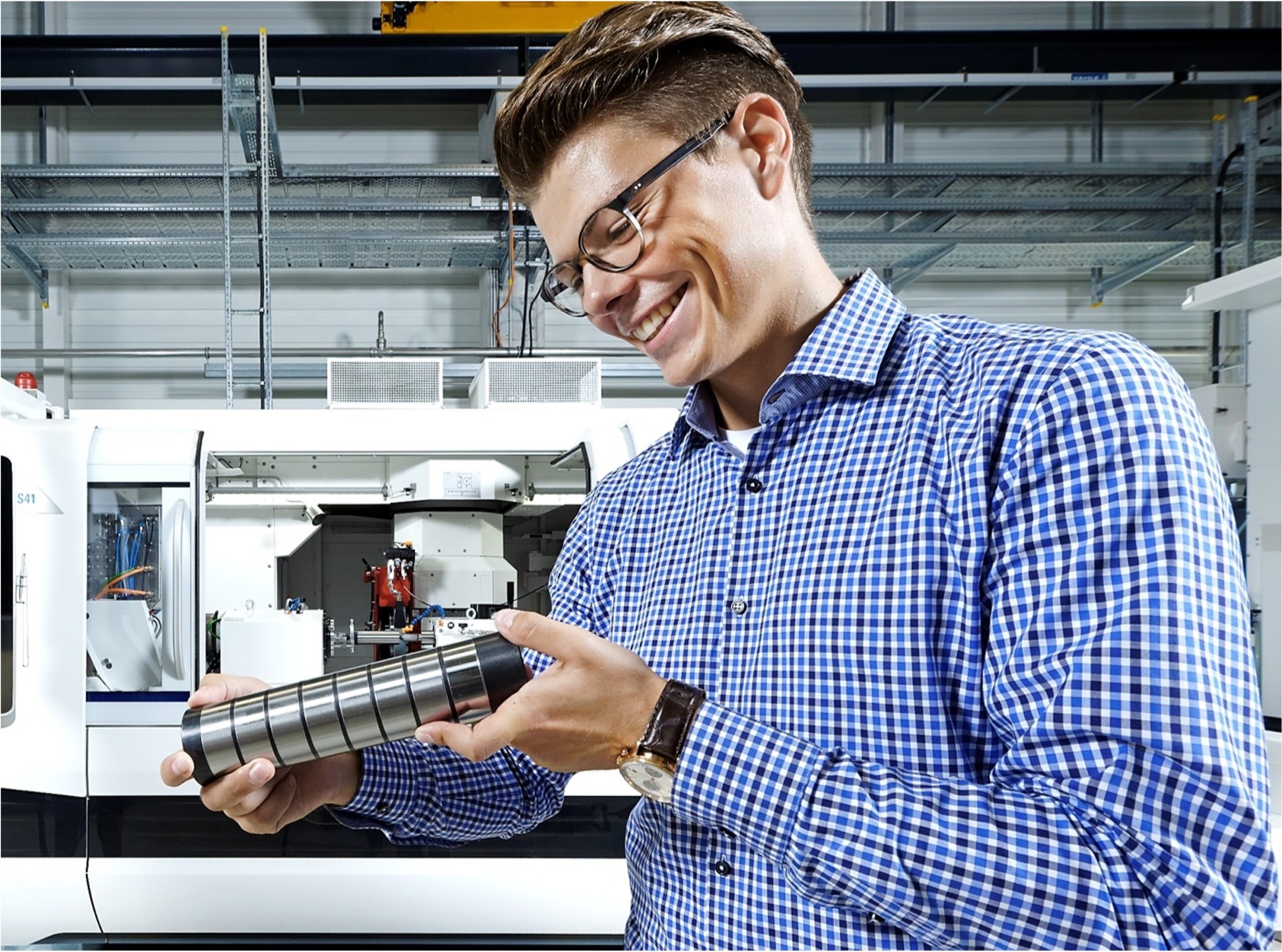
“High-precision ground components reduce friction losses and thus directly contribute to optimizing the range,” says Christoph Plüss, Chief Technology Officer (CTO) of United Machining Solutions, based in Bern, Switzerland.
Photo: United Machining Solutions